





Organization Seeks More Sites to Meet Increased Demand for Contact Lens and Dry Eye Disease Research
WATERLOO, Ont., December 10, 2018—Anticipating continued growth in 2019, the Centre for Ocular Research & Education (CORE) is seeking additional Canadian eye care practices to serve as clinical study sites. Eligible practices need to fit high volumes of contact lenses and/or have an interest in treating dry eye disease.
CORE has successfully collaborated with several Canadian practices in recent months, including Eyes on Sheppard Optometric Clinic in Toronto, Mission Eye Care in Calgary and Clinique D’Optometrie Bélanger in Montreal.
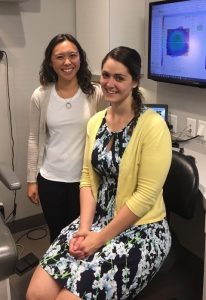
“We’re fortunate to have phenomenal eye care practices located across Canada, and CORE has worked with several in recent years on studies that have worldwide impact,” said CORE Director Lyndon Jones, PhD, DSc, FCOptom, FAAO, FBCLA. “Partnering with innovative sponsors and through our independent initiatives, CORE is helping advance ocular science and improve the vision of millions. We’re eager to collaborate with even more Canadian practices as the breadth and volume of our research expands.”
Studies may include new contact lens materials, solutions and designs, plus new dry eye management therapies incorporating pharmaceuticals, lubricants and devices. In addition to patient recruitment, some practices may be ideal for retrospective chart reviews and data collection. Practices do not require previous clinical trials experience.
For more information, contact CORE at (519) 888-4742 or CORE@uwaterloo.ca.
About the Centre for Ocular Research & Education (CORE)
The Centre for Ocular Research & Education (CORE) – formerly known as the Centre for Contact Lens Research – was established in 1988 at the University of Waterloo’s School of Optometry & Vision Science. Over the next three decades, the organization evolved from a three-person operation into a thriving hub of basic and applied research, collaborating with sponsors, agencies and academia on advanced biosciences, clinical research and education. Its uncompromising independence and results of the highest quality have been at the heart of many of the most prominent advances in eye health. Today, its approximately 50-person team serves a range of ophthalmic sectors, including medical devices, ocular pharmaceuticals, digital technology and others, with a focus on the anterior segment. For more information, please visit core.uwaterloo.ca.
MEDIA CONTACTS:
Aimee J. Lewis or Mike McDougall, APR, Fellow PRSA, McDougall Communications for CORE
aimee@mcdougallpr.com +1.585.414.9838 | mike@mcdougallpr.com +1.585.545.1815

 Traditional ocular testing uses a vial or a test tube for early stage research, with later pre-clinical studies performed using an animal model. However, vials and test tubes do not remotely resemble the complex structure of the eye, leading to variable outcomes, and increasing regulation and public opinion is limiting animal experimentation. Incorporating OcuBlink to test concepts and prototypes at an earlier stage will minimize costs, reduce animal experimentation, and create deeper understanding of the underlying science of how new and existing products interact with the eye.
 It was thrilling to unveil CORE Knowledge, the ultimate eye science game at ARVO 2018. Hundreds stopped by our booth to play and they were hooked in seconds to the rapid-fire, two-minute trivia game.
 Clinicians, researchers, journalists, students and industry professionals answered more than 14,000 questions during ARVO 2018. High scorer Rajini Peguda from the School of Optometry and Vision Science at UNSW Sydney, emerged the grand champion, and Will Ngo, University of Alabama School of Optometry, and Eric Carlson, Aerie Pharmaceuticals, came in second and third, respectively. Match wits with ARVO winners and challenge others to see your name reign on the board!
 CORE Knowledge was born out of 30 years of working with partners to make great contributions to advancing vision science and research. With the first edition now played by members of the optometry and ophthalmology communities around the world, we invite you to submit questions to future editions of CORE Knowledge. Questions may be submitted, along with four multiple choice options (including the correct answer indicated) via email to
  CORE Knowledge is free and can be played online without downloading any software or applications. And there’s no limit to how often or how long you play. Go to