





Organization Continues to Extend Its Global Reach in Ocular Research;
Multiple Scientists to Present Papers, Posters and More in the Netherlands
WATERLOO, Ontario, February 24, 2020—Scientists from the Centre for Ocular Research & Education (CORE) will have their largest-ever presence at the 8th Dutch Contact Lens Congress (Nederlands Contactlens Congress / NCC), which runs March 15-16 in Veldhoven, The Netherlands. CORE researchers are scheduled to present multiple papers, posters and education sessions on some of the most critical issues in contact lens prescribing and development, including industry growth, contact lens safety, wearer satisfaction and pediatric use.
“The theme of the conference is ‘Beyond 2020’ and we consider this an apt description of what we have in store for NCC this year,” said CORE Head of Clinical Research Jill Woods, MSc, MCOptom, FAAO, FBCLA. “Our topics are central to what’s ahead for the entire contact lens category. CORE’s independence, the breadth of our research capabilities, and our work with a range of sponsors globally generate unique perspectives—ones we’re excited to share in Veldhoven.”
Dr. Woods is the lead author of “5 years of daily disposable contact lens wear in children,” which will be presented on Monday, March 16 at 1:30 p.m. in conjunction with the MiSight® 1 day clinical study group. She will also deliver a podium review of the “Satisfaction of habitual wearers of reusable multifocal lenses when refitted with a daily disposable, silicone hydrogel multifocal lens” poster on the afternoon of Sunday, March 15, in addition to co-moderating the larger session.
Doerte Luensmann, PhD, Dipl. Ing. (AO), FAAO, a senior clinical scientist at CORE, will speak on new digitally-aided techniques for successful lens fitting as part of two paper presentations. “The use of a modern web-application to assist reusable toric lens fitting success” and “Toric lens fitting success supported by an online fitting app” will be shared back-to-back, beginning on Monday, March 16 at 2:12 p.m.
CORE Clinical Scientist Karen Walsh, BSc(Hons), PGDip, MCOptom, FIACLE, FBCLA, and Director Lyndon Jones, PhD, DSc, FCOptom, FAAO, FBCLA, are teaming up at NCC for two continuing education programs that are sure to draw sizable crowds.
The first program, on Sunday, March 15 at 11:15 a.m., explores the opportunities for continued expansion of the daily disposable modality. They will be joined by Philip Morgan, BSc, PhD, MCOptom, FAAO, FBCLA, director of Eurolens Research at The University of Manchester.
The second program will take place on Monday, March 16 at 9:30 a.m. Drs. Walsh and Jones will partner with Marco van Beusekom, BOptom, FIACLE, Professional Affairs manager, Benelux, Johnson & Johnson Vision, to discuss best practices in safe wear and care of contacts and the importance of encouraging compliance in practice.
In addition to its clinical education tracks, NCC is also known for bringing together eye care professionals with social events, celebrating friendships and professional relationships alike. The eye care professionals attending NCC will be in for a special treat as the opening day comes to a close, when Drs. Jones and Walsh assist Sarah Morgan, BSc(Hons), MPhil, MCOptom, FAAO, FBCLA, in a comedy and live music-filled eye and music-themed quiz. Those festivities get underway at 4:30 p.m. on Sunday, March 15 in the Baronie Room.
For more information about CORE, please visit core.uwaterloo.ca.
# # #
About the Centre for Ocular Research & Education (CORE)
The Centre for Ocular Research & Education (CORE) was established in 1988 at the University of Waterloo’s School of Optometry & Vision Science. Over the next three decades, the organization evolved from a three-person operation into a thriving hub of basic and applied research, collaborating with sponsors, agencies and academia on advanced biosciences, clinical research and education. Its uncompromising independence and results of the highest quality have been at the heart of many of the most prominent advances in eye health. Today, its approximately 50-person team serves a range of ophthalmic sectors, including medical devices, ocular pharmaceuticals, digital technology and others, with a focus on the anterior segment. For more information, please visit core.uwaterloo.ca.
MEDIA CONTACTS
Aimee J. Lewis or Mike McDougall, APR, Fellow PRSA, McDougall Communications for CORE
aimee@mcdougallpr.com +1.585.414.9838 | mike@mcdougallpr.com +1.585.545.1815



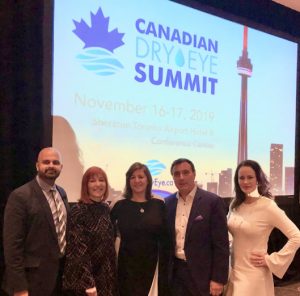 “Clinical management of dry eye disease is front of mind for many practitioners as they explore building and expanding their contemporary evidence-based practice,” said Karen Walsh, CORE clinical scientist and Contact Lens Update editor. “We’re excited to bring the best of the Canadian Dry Eye Summit to professionals around the world through our newest issue.”
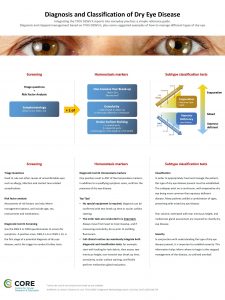 Key observations from the speakers are summarized in the
  Paul Gifford, the noted Australian optometrist and research scientist specializing in ortho-K and myopia control, was invited by CORE to curate the special edition. His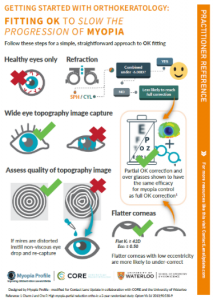

 According to researchers at the University of Waterloo, while preservative-free drops are best for severe dry eyes, they are not the only option to consider in the management of more mild stages of the disease.
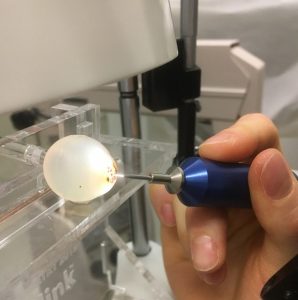 the removal of materials from the eye, such as tiny pieces of metal from the cornea. OcuBall comes premade with carbon/mild steel particles inserted on the surface of the eye to provide a realistic, safe and inexpensive clinical scenario for the practice of foreign body removal. Over time, the metal pieces can rust and form a typical rust ring, just as they do in the human eye.
 Over the past few years, a better understanding has been reached of what is happening at the cellular level when this type of staining occurs, and has provided suggestions both for the mechanism by which this occurs and the agents that may be responsible. Novel in vitro experimentation by Tahmina Khan, PhD, contributes recent evidence in this area, highlighted in a